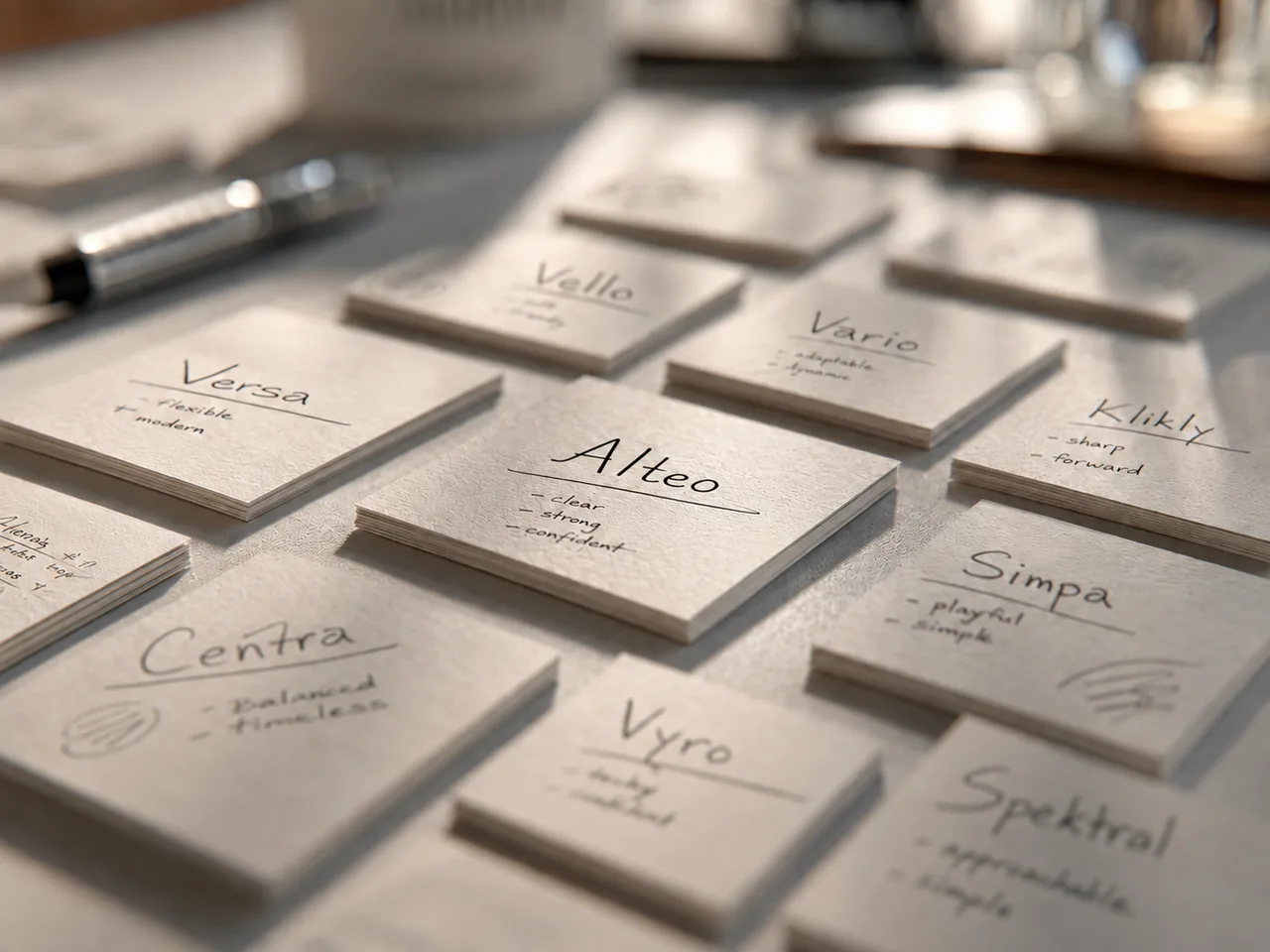
Naming usually looks simple from the outside: make a list, check the domains, remove the obvious problems, and choose the best option.
In practice, a name has to sound right, look right, feel credible, be easy enough to remember, and leave enough space for the brand to grow.
In a recent naming project for a technical product, the brief looked simple at first. The name had to be short, credible, easy to pronounce, suitable for international use, and ideally still workable as a domain. None of those requirements was unusual on its own, but together they created the real problem.
A short name can become empty. A technical name can become cold. A clear name can become generic. An invented name can become strange. A domain can be available and still not be strong enough as a brand.
That is why naming should not start with a list of words. It should start with direction.
Before the name
The first useful question is not only what the brand should be called, but what the name needs to help people understand.
If the brand needs to work internationally, the name cannot depend too much on local nuance. If the product may later become part of a broader system, it should not describe the first version too narrowly. And if the category is technical, clarity matters, but not at the cost of being forgettable.
A name cannot fix unclear positioning. It can only make a clear direction easier to understand.
A name cannot carry a direction that has not been defined.
Fewer ideas, better filters
Naming is not only about generating options. Most of the work is filtering them.
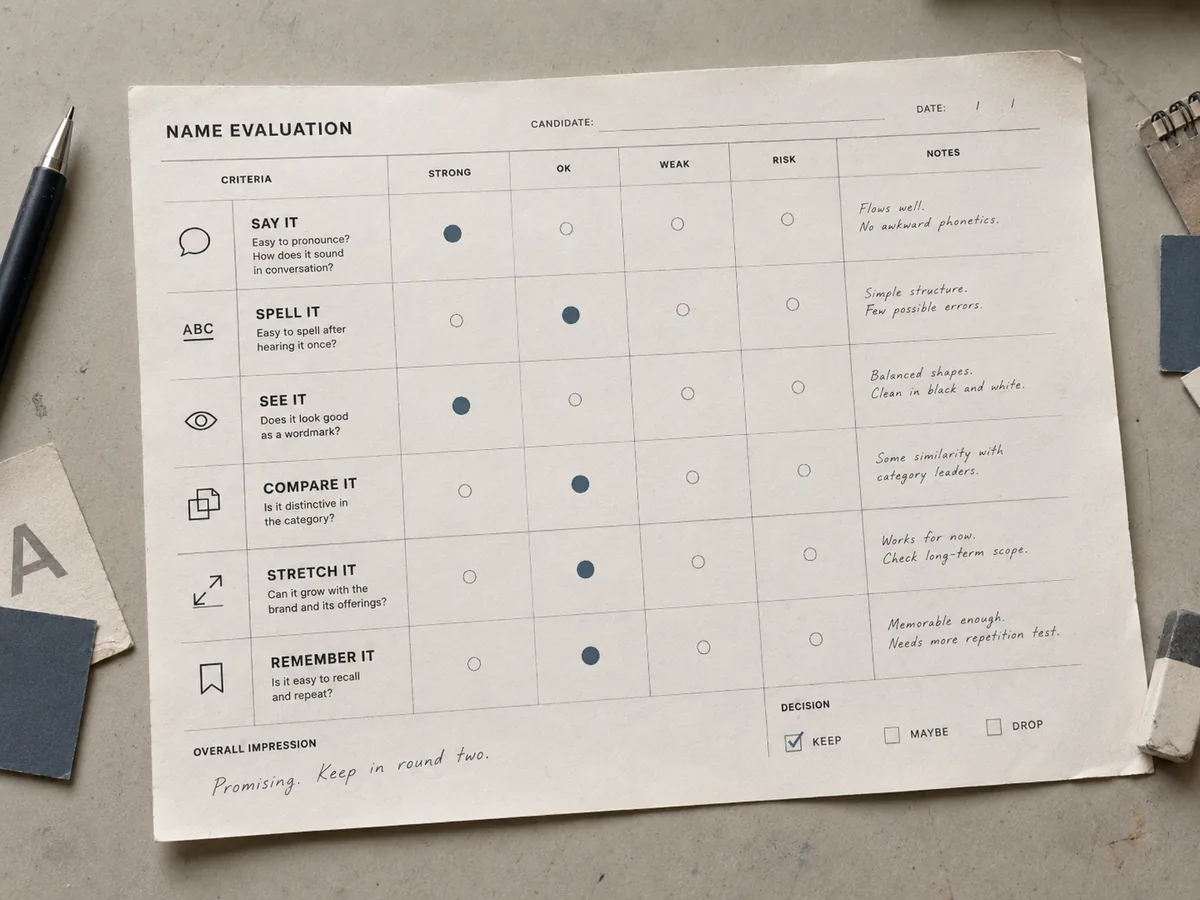
A good candidate has to survive simple tests. People should be able to say it, spell it after hearing it, and use it without too much explanation. For international work, you also need to know what it means or resembles elsewhere, whether it sits too close to competitors, and whether it still leaves room for the offer to grow.
Then there is the visual test: what happens when the name actually has to become a wordmark?
Not every rejected name is a failed idea. Sometimes it simply helps define what the brand is not.
It also helps to judge names by direction, not only as isolated words. A descriptive route creates a different brand from an invented or metaphorical one. Each brings its own advantages and limitations, and none is automatically right.
The shortlist is not the result
A shortlist can look like the end of the process, but it is usually the moment when the work becomes more practical.
How does it sound in a sentence? How does it look in a logo? Can it sit in a product interface, an email signature, or a future brand architecture without feeling forced?
There is often pressure for the name to feel exciting immediately. The strongest name is not always the one with the biggest first reaction. It is the one that keeps working after that fades.
The name does not need to do everything, but it needs to keep working.
The familiar Amazon naming story is a useful reminder. The company reportedly began with Cadabra, from “abracadabra,” before changing to Amazon. Cadabra had an idea behind it, but it could be misheard. Amazon gave the business something broader to grow into.
A name has to work outside the founder’s head.
A name becomes real through identity
A name is not finished when it is chosen. It becomes real through use.
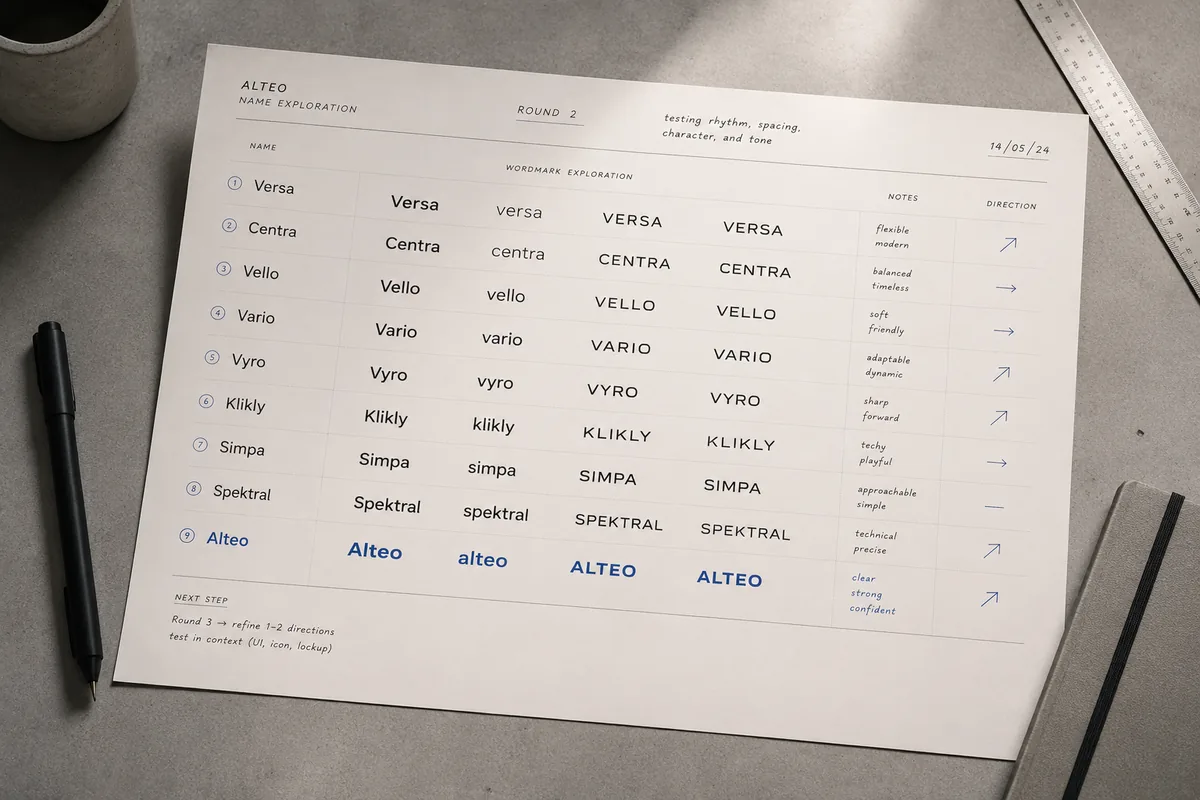
A name can change considerably once you start setting it, spacing it, and using it. Something that sounded strong in a list can suddenly feel awkward as a wordmark. Another option can reveal a rhythm or character that was difficult to see in plain text.
That is why naming and identity design should not be treated as completely separate parts of the work. A name can suggest a certain visual rhythm or level of restraint. The identity then tests whether that potential is actually useful.
What should last
The value of naming is not in producing a long list. The real outcome is a name that gives the brand a usable direction and enough room to grow. It should sound right, survive ordinary use, and not become smaller than the brand it is meant to support.
The question is not only what sounds good. It is what can last.