
Codeanywhere shut down in July 2026, more than fifteen years after the product began as PHPanywhere.
I worked on the early PHPanywhere identity and later on the rebrand direction that became Codeanywhere. The project belongs to a particular moment in technology, when writing code in a browser was still unusual enough to be part of the proposition.
The original product connected developers to their hosted files through the browser. As it expanded beyond PHP and into a broader cloud development platform, the name changed too.
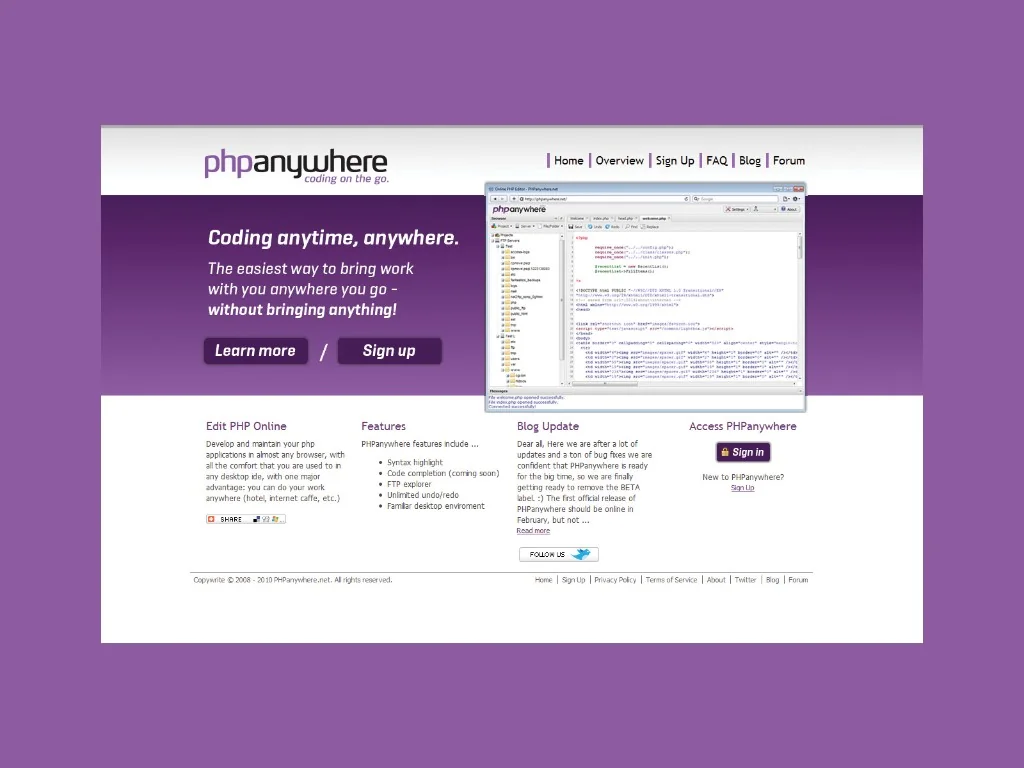
What interests me now is not whether the identity still looks current.
It is the timeline around it.
A small product in a young category. A browser-based editor before browser-based development felt normal. A new name as the product expanded. Then more than fifteen years of product life before the service eventually closed.
Design work is usually presented around launch. That is when everything is cleanest: the new logo, the selected applications, the explanation of what was intended.
But some projects become more interesting later, once you know what happened next.
Some identities do not end when the product goes offline.
An old identity can become evidence of a particular moment: what a product was trying to become, what still needed explaining, and how a category described itself before its language became familiar.
That is why archives matter.
Websites disappear. Interfaces are replaced. Domains change. Old presentations and source files sometimes become the clearest record that a particular version of a product ever existed.
That does not mean every old project needs to return as a polished case study.
Codeanywhere is more useful here as a small piece of studio history: an early technology product, a long-running relationship, and identity work made before coding in the browser felt normal.